Most pool owners focus on what happens when their salt system is running. Chlorine output, pump speed, and water balance get most of the attention.
What's often overlooked is what happens when the system is not running.
In reality, off-cycles play a critical role in salt cell wear and lifespan, and they are one of the least understood aspects of salt chlorine generation.
Salt Cells Don't "Rest" When the System Is Off
When a salt system shuts off, chlorine production stops — but environmental stress does not.
During off-cycles:
- Water is no longer flowing through the cell
- Heat can become trapped inside the housing
- The cell remains exposed to ambient temperatures and sunlight
- Residual moisture and chemistry remain on the diodes
This creates conditions where heat buildup and UV exposure can quietly continue, even though the system appears idle.
Trapped Heat Accelerates Wear
Salt cells generate heat during normal operation. When water flow stops, that heat does not instantly dissipate.
Repeated cycles of:
- Heating during operation
- Heat retention during off-cycles
- Cooling and reheating
Create thermal stress that accelerates material fatigue and scaling over time.
This process occurs day after day, often unnoticed.
UV Exposure Is an Overlooked Factor
Many salt cells are installed outdoors in direct sunlight.
Even when the system is off:
- UV exposure continues
- Housing temperatures can rise
- Internal components remain exposed
Over months and years, UV exposure contributes to degradation of materials and seals, adding another layer of stress to the cell.
Off-Cycle Time Often Exceeds Run Time
In many pools, salt systems run 8–12 hours per day. That means the cell may spend 12–16 hours per day in an off-cycle state.
Over the course of a year, that adds up to thousands of hours where heat retention and UV exposure can quietly contribute to wear — without producing any chlorine.
Ignoring off-cycles means ignoring half the salt cell's life.
Why Off-Cycle Protection Matters
While chlorine production will always contribute to salt cell wear, off-cycle exposure is one of the few areas where damage can be reduced.
Limiting excess heat and UV exposure during off-cycles helps slow:
- Scale formation
- Material fatigue
- Long-term degradation
This is an often-missed opportunity to extend usable salt cell life.
The Bottom Line
Salt cells don't only wear out when they're working. They also wear down when they're sitting idle under heat and sun.
Understanding off-cycles — and protecting the cell during that time — is a key part of managing salt cell longevity.
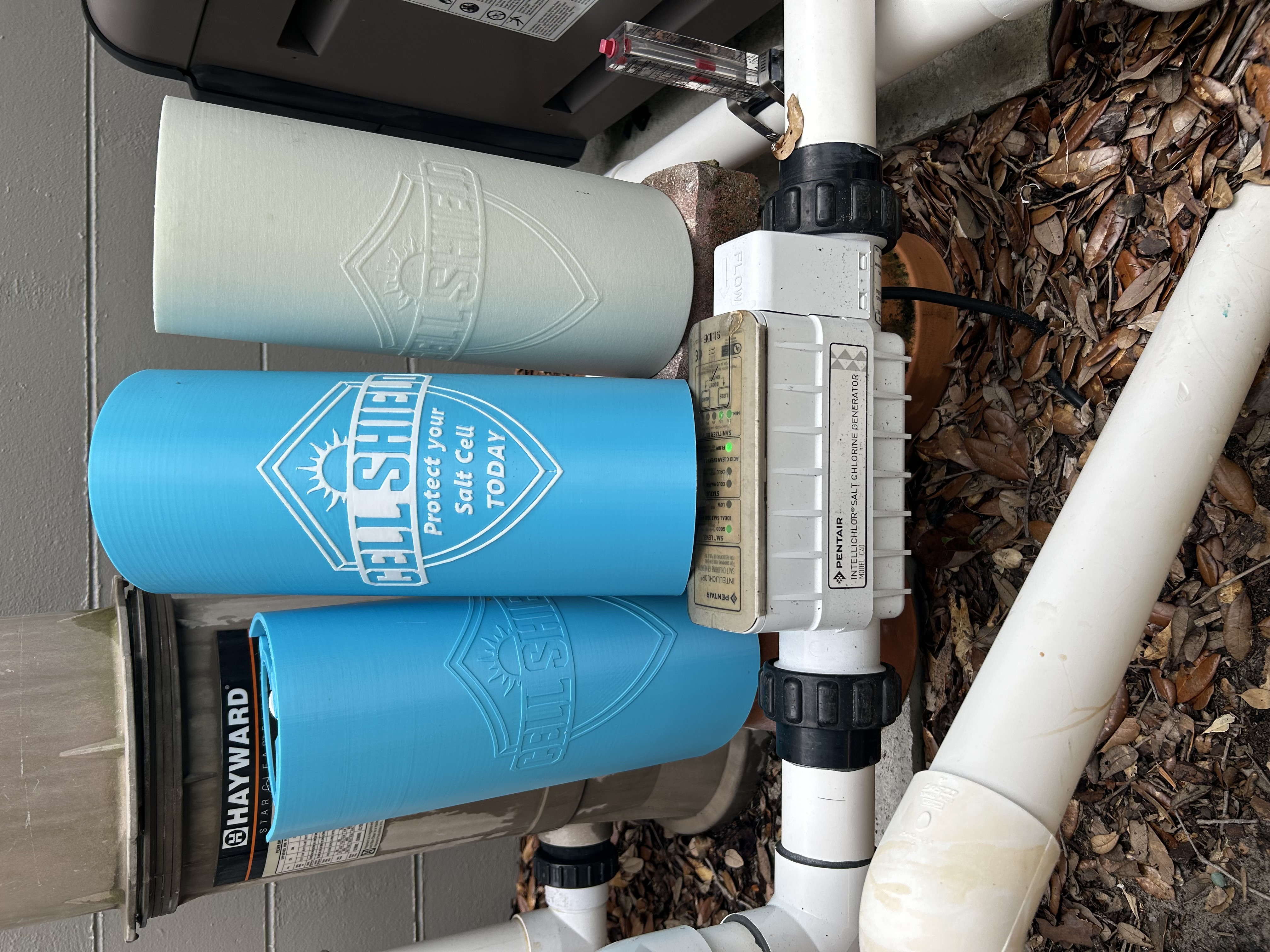
That's exactly what Cell Shield is designed to address. By eliminating UV exposure and reducing heat during off-cycles, Cell Shield helps protect salt cells during the hours most pool owners never think about.
Protect Your Salt Cell During Off-Cycles
Cell Shield eliminates UV exposure and reduces heat during off-cycles to help extend salt cell life. Salt cells cost approximately $1,250 to $1,500 to replace and can fail early. Protect your investment with Cell Shield.
Learn More About Cell Shield